

AC Repair in Auburn, AL
Licensed HVAC professionals serving Auburn, Opelika, and Lee County for more than 40 years. HVAC License #15068.
When an air conditioner stops cooling during an Alabama summer, the timeline between a working system and an unsafe indoor environment is shorter than most homeowners expect. The Alabama Department of Public Health identifies extreme heat as one of the leading environmental health risks in the state, and Auburn’s sustained July temperatures above 90 degrees Fahrenheit can push interior temperatures in a closed home to dangerous levels within a few hours of system failure.
Caswell Heating Air has diagnosed and repaired residential and commercial AC systems throughout Auburn and Lee County for more than 40 years. Our licensed technicians arrive equipped to identify the failure on the first visit and complete most repairs the same day.
Schedule your AC repair online to get a licensed Caswell technician to your Auburn home.
Common AC Failures Caswell Heating Air Repairs in Auburn
Auburn’s climate creates a predictable set of AC failure modes that our technicians see repeatedly across Lee County. Knowing what fails most often in this specific environment means our diagnostic process is more efficient than a generic approach.
Failed run capacitor. The run capacitor powers the compressor and condenser fan motor through each startup cycle. In Auburn’s summer heat, where ambient temperatures at the outdoor unit can exceed 105 degrees Fahrenheit during afternoon peak hours, capacitors degrade faster than manufacturer ratings predict. A capacitor that measures more than 10 percent below its rated microfarad value cannot reliably start the compressor and will cause a no-cooling condition on one of the hottest days of the year.
Low refrigerant charge. A system that has developed a slow leak at a fitting or at the evaporator coil loses refrigerant over time. The symptoms are a system that runs continuously without reaching setpoint, ice forming on the refrigerant lines or indoor coil, and reduced airflow through the supply registers. Caswell technicians identify the source of the leak using an electronic refrigerant leak detector before adding charge, so the problem does not return within the same season.
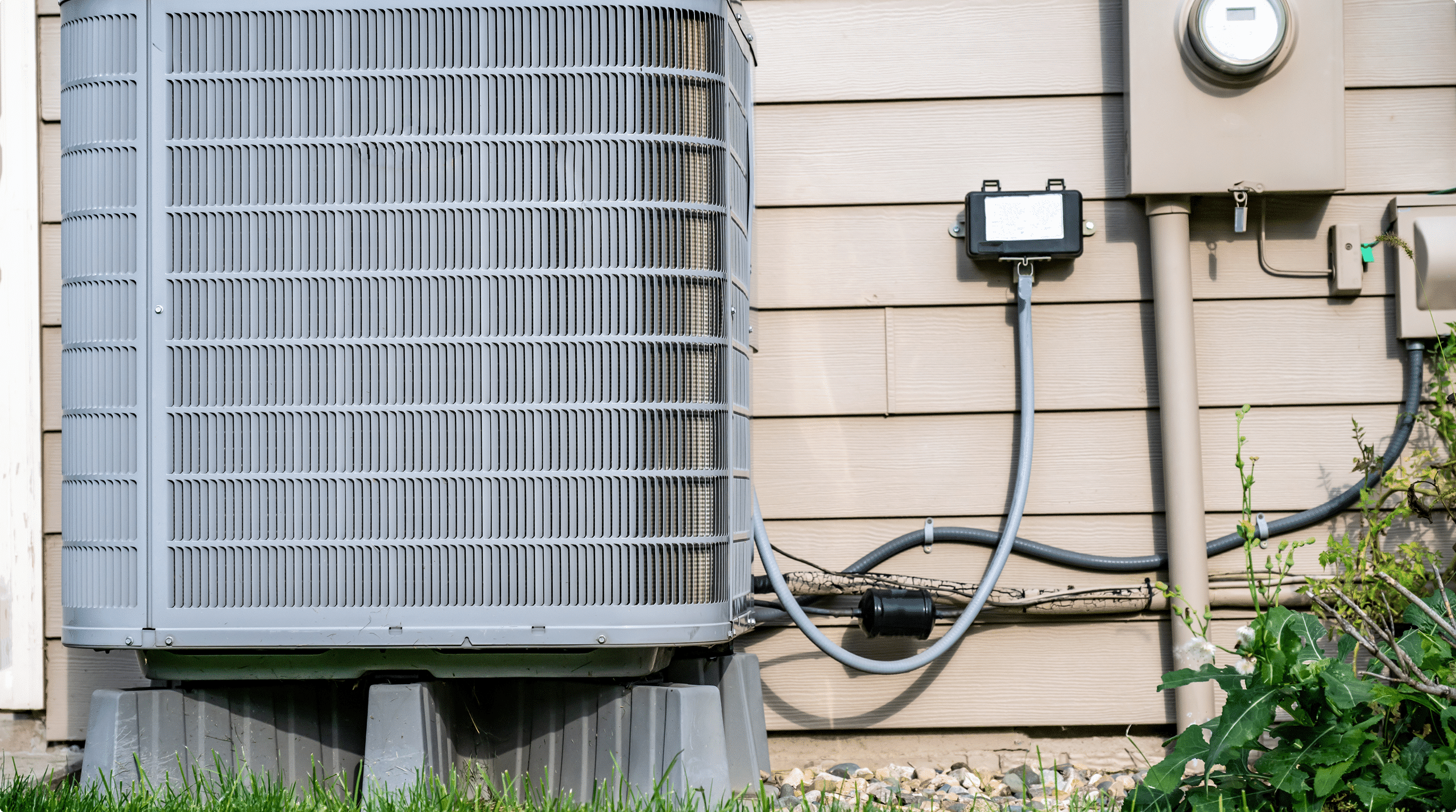
Dirty condenser coil. An outdoor condenser coil blocked by pollen, debris, and cottonwood buildup cannot reject heat efficiently. This raises the high-side refrigerant pressure, forces the compressor to work beyond its design parameters, and eventually trips the high-pressure safety cutout. Auburn’s tree canopy and heavy seasonal pollen load make this a frequent repair trigger in the spring and early summer.
Tripped high-limit or safety cutout. A system that shuts off and will not restart, with the thermostat still calling for cooling, has often tripped an internal safety device due to overheating, refrigerant pressure, or an electrical fault. Resetting the system without identifying why the safety tripped allows the underlying condition to continue damaging the equipment.
Failed contactor. The contactor is the high-voltage switch that connects utility power to the compressor and outdoor fan motor. Contactors that have developed burned or pitted contact surfaces cause arcing under load, intermittent operation, and eventual failure to energize. They are a straightforward replacement but require proper load testing after installation to confirm the circuit is operating correctly.
Tori M. called Caswell Heating Air when her system was not performing correctly and described a technician who found the problem immediately and delivered results that competing quotes had not:
“Josh quickly identified our issue and saved us tons of money compared to other competitors. Thank you, Josh and team, for the friendly and amazing service!”
Our AC Repair Process in Auburn
Step 1: System Assessment. The technician notes the equipment make, model, and age, then reviews any symptoms the homeowner has observed, when the problem started, whether the system runs but does not cool, whether it fails to start, or whether it shuts off before reaching the setpoint. This information guides where the diagnostic begins.
Step 2: Electrical and Refrigerant Testing. A digital multimeter measures voltage at the disconnect, amperage draw at the compressor and fan motor, and capacitance at the run capacitors. A refrigerant manifold gauge set measures high-side and low-side pressures against the manufacturer’s published specifications for the current outdoor temperature. These measurements identify whether the failure is electrical, mechanical, or refrigerant-related before any disassembly begins.
Step 3: Fault Identification and Written Estimate. The technician explains the finding to the homeowner in plain language and provides a written repair estimate before any work is approved. For systems where multiple issues are identified, the technician explains which repairs are immediately necessary and which can be deferred, so the homeowner can make an informed decision.
Step 4: Repair. Parts carried on the service vehicle cover the most common single-visit repair needs: run capacitors, contactors, start capacitors, and common electrical components. For parts that require sourcing, the technician advises on the timeline and discusses options for keeping the space as cool as possible until the repair is completed.
Step 5: Performance Verification. See the section below.
Performance Verification After AC Repair
Before closing any repair call, Caswell Heating Air re-tests the system under operating load. Refrigerant pressures are re-measured and compared against the specification. Amperage draw on the compressor is confirmed against the nameplate rating. The temperature differential between return and supply air is measured to confirm that the system is producing adequate cooling output.
Voltage at the disconnect and at the contactor is confirmed under load. These measurements are documented, and you receive a written service record covering the fault found, the repair performed, the parts installed, and the post-repair readings before the technician leaves.
When to Call for Emergency AC Repair in Auburn
Not every AC problem needs to be addressed at emergency rates, but some conditions warrant immediate attention regardless of the hour.
- A system that has stopped producing any cooling in a home with elderly residents, young children, or anyone with a heat-sensitive medical condition should be treated as an emergency during Auburn’s summer months. Interior temperatures in a closed home on a 95-degree day can exceed safe limits within two to three hours.
- A system emitting a burning smell from the air handler or outdoor unit, or one with a circuit breaker that trips repeatedly when the system attempts to start, should not be restarted until a licensed technician has diagnosed the cause. Continued operation in these conditions can convert a repairable electrical fault into a fire hazard or a compressor replacement.
Caswell Heating Air provides 24-hour emergency HVAC repair for Auburn and the surrounding Lee County communities.
Brian L. described what the Caswell Heating Air team delivered from the first call to the completed repair:
“From the moment I called to the moment the job was done, the service was flawless. The crew showed up on time, full of energy, and got my system running like brand new. They went above and beyond.”
Why Choose Caswell Heating Air for AC Repair in Auburn
- Serving Auburn, Opelika, Phenix City, and Lee County for more than 40 years.
- HVAC License #15068 issued by the State of Alabama.
- 5.0 stars across 663 verified Google reviews. Voted Best of Auburn-Opelika 2024.
- Fully insured: general liability and workers’ compensation.
- Common repair parts carried on the service vehicle for same-visit resolution on most calls.
- Written estimate before any repair is approved. No work begins without your written authorization.
- 24-hour emergency HVAC repair available for urgent situations.
- Comfort Club members receive priority scheduling and 10 percent off repairs. See membership details
- Financing available for larger repairs and system replacements. See financing options
- When a repair is not cost-effective, we provide honest guidance on AC installation and replacement.
Schedule AC Repair in Auburn Today
Caswell Heating Air repairs central AC systems, heat pumps, and ductless systems throughout Auburn, Opelika, Beauregard, Phenix City, and the surrounding Lee and Russell County communities. After the repair is complete, our team handles AC maintenance to keep the system performing at specification and reduce the likelihood of future failures.
Every repair call is documented, every estimate is written before work begins, and every system is tested under load before we leave.
Schedule your AC repair online to get a licensed technician to your Auburn home.
Frequently Asked Questions About AC Repair in Auburn, AL
How do I know if my AC needs repair or replacement? A system under 12 years old with a single component failure is almost always worth repairing. A system over 15 years old with a failing compressor or with a history of recurring failures is often more cost-effective to replace. Our technicians give you an honest assessment of both options with written estimates for each, so you can make the decision that fits your budget and long-term plans.
Does Caswell Heating Air offer after-hours emergency AC repair in Auburn? Yes. Emergency HVAC repair is available 24 hours a day for urgent situations. Request emergency service through our website.
Can you repair all AC brands? Yes. Caswell Heating Air technicians work on all major HVAC brands and system types, including central split systems, heat pumps, package units, and ductless mini-splits.
What causes an AC to stop cooling but still run? The most common causes are a failed run capacitor preventing the compressor from starting, low refrigerant charge, a dirty condenser coil causing high-pressure cutout, or a failed contactor that is not completing the circuit to the compressor. A technician with a multimeter and manifold gauge set can identify which of these is the cause within the first 15 minutes of the diagnostic.
What is included in the written estimate? The estimate covers the repair to be performed, the parts required, the labor cost, and any applicable warranty terms. No repair work begins without your written approval of the estimate.
Ready to Get Started?